Congenital adrenal hyperplasia (CAH) is a genetic condition that affects your adrenal glands and how they make important hormones. It can impact growth, development and how you handle stress. Depending on the type, symptoms can start at birth or later in life. CAH is a lifelong condition. But with the right treatment, most people manage it well.
Advertisement
Cleveland Clinic is a non-profit academic medical center. Advertising on our site helps support our mission. We do not endorse non-Cleveland Clinic products or services. Policy
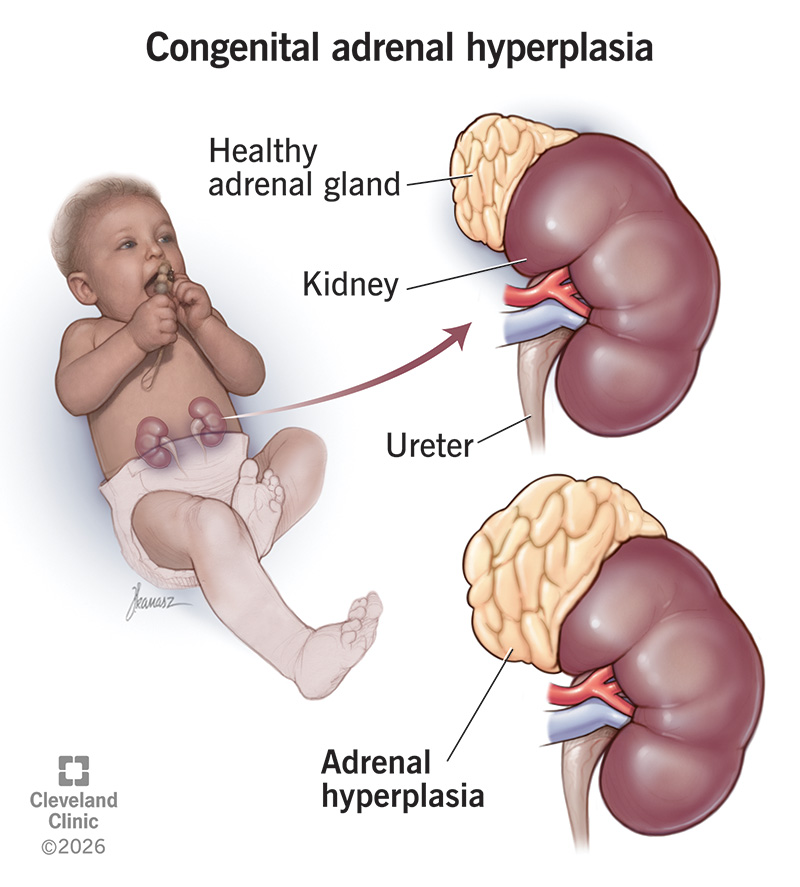
Image content: This image is available to view online.
View image online (https://nail-vitality.co/-/scassets/images/org/health/articles/17817-congentital-adrenal-hyperplasia%3C%21-- -->)
Congenital adrenal hyperplasia (CAH) is a group of inherited genetic disorders that affect your adrenal glands. You have one adrenal gland sitting on top of each kidney. These glands make hormones that your body needs to work properly, including:
Advertisement
Cleveland Clinic is a non-profit academic medical center. Advertising on our site helps support our mission. We do not endorse non-Cleveland Clinic products or services. Policy
If you have CAH, your adrenal glands don’t have the enzyme they need to make these hormones correctly. Most often, it’s a missing or faulty 21-hydroxylase enzyme. Because of this, your adrenal glands may:
CAH is sometimes called adrenogenital syndrome because it affects both adrenal hormones and sexual development.
There are two main types of CAH.
Classic CAH is the more severe form. It usually shows up at birth or shortly after. It can be life-threatening without treatment. There are two subtypes:
Advertisement
Nonclassic CAH is the mildest and most common form overall. It usually doesn’t appear until later in childhood, the teen years or adulthood.
You may have minor symptoms or none at all. When symptoms do happen, they’re often related to extra androgens.
Symptoms of congenital adrenal hyperplasia (CAH) can vary based on the type and how your body makes hormones. Symptoms develop because your body has too much androgen or too little cortisol or aldosterone.
Congenital adrenal hyperplasia in females can sometimes cause atypical genitalia at birth. Male babies may have an enlarged penis.
In severe (salt-wasting) CAH, babies of either sex can develop a condition called an adrenal crisis. This usually happens within the first one to two weeks of life and needs immediate treatment.
As children grow, high androgen levels can cause:
Extra androgens in females can lead to:
Symptoms in males may be less obvious, especially early on. They can include:
Nonclassic CAH is milder. You may not have any symptoms. If you do, you might notice:
CAH happens because of a problem with one of the enzymes your adrenal glands need to make hormones. Enzymes are like helpers that guide your body through each step of hormone production. If one is missing or not working right, your body can’t make hormones the way it should.
The most common cause of CAH is a shortage of an enzyme called 21-hydroxylase. Less often, CAH happens when you lack the 11-beta-hydroxylase enzyme.
Changes (variants) in a certain gene affect your levels of these enzymes.
Congenital adrenal hyperplasia (CAH) is a genetic condition that follows an autosomal recessive pattern. That means you must inherit the affected gene from each biological parent for you to have the condition. You’re more likely to have CAH if:
In classic CAH (especially the salt-wasting type), your body can lose too much salt and fluid. This can lead to a life-threatening adrenal crisis. Complications may include:
Advertisement
Healthcare providers diagnose CAH at different times in life, depending on the type.
If CAH runs in your family, your provider may offer testing during pregnancy. This can include:
These tests look for gene changes linked to CAH.
In the U.S., your baby’s provider will screen for CAH shortly after birth as part of routine newborn screening. This involves a heel-prick blood test that checks levels of a hormone called 17-hydroxyprogesterone (17-OHP). High levels can be a sign of classic CAH.
If your provider doesn’t find CAH at birth or you have the nonclassic type, they may diagnose it later when symptoms show up.
Tests may include:
Congenital adrenal hyperplasia treatment focuses on replacing missing hormones and controlling excess androgen. Your healthcare provider will monitor your condition and order regular blood tests to check your hormone levels. Your care plan depends on the CAH type and your symptoms.
Advertisement
Your healthcare provider may prescribe several medications to treat classic CAH.
A baby with classic CAH may need extra salt, especially in their first year of life. This is because their body doesn’t make enough aldosterone to hold on to sodium.
Your baby’s provider may recommend salt supplements. This is to help maintain normal fluid balance, blood pressure and growth until your baby is able to get enough salt from foods.
Most people with CAH need medication to replace hormones their body can’t make. Medications may include:
People with classic CAH usually need these treatments every day for life.
Along with hormone therapy, your provider may recommend a CRF-1 antagonist. This medication helps control androgen levels, which allows for lower doses of glucocorticoids. This is important because high doses of steroids over time can cause side effects.
In 2024, the U.S. Food and Drug Administration approved the first CRF-1 antagonist. Crinecerfont (Crenessity™) is approved for people with classic CAH ages 4 and up. You take it with food that contains some fat.
Advertisement
You still need to take hormone therapy with this medication. It’s an add-on treatment, not a replacement.
If you have nonclassic CAH, you may not need treatment at all. If symptoms develop, treatment may include:
Some people only need treatment for a short time. You usually won’t need lifelong treatment.
Congenital adrenal hyperplasia (CAH) isn’t curable. It’s a lifelong condition that you’re born with.
But treatment can help you manage symptoms, balance your hormones and live a healthy life. Many people with CAH do well with the right care and regular follow-up.
With early diagnosis and proper treatment, most people with CAH have a normal or near-normal life expectancy. With ongoing treatment, you can live a healthy, active life with CAH. Many people go to school, work and have families.
If you have classic CAH, you’ll need to take medication every day for life. If you stop treatment, your symptoms can come back and may become serious.
Outcomes can vary, but you may experience:
Children who receive early treatment usually grow and develop more typically than people diagnosed later.
Living with congenital adrenal hyperplasia (CAH) means paying close attention to your hormone levels. But you won’t be managing this condition alone. Your healthcare provider will adjust your treatment as your needs change over time. They’ll help you understand the signs of hormone imbalance and stay on track with your medication. With proper treatment and routine follow-up, most people with CAH do very well and can live a healthy, active life.




Sign up for our Health Essentials emails for expert guidance on nutrition, fitness, sleep, skin care and more.
Learn more about the Health Library and our editorial process.
Cleveland Clinic’s health articles are based on evidence-backed information and review by medical professionals to ensure accuracy, reliability and up-to-date clinical standards.
Cleveland Clinic’s health articles are based on evidence-backed information and review by medical professionals to ensure accuracy, reliability and up-to-date clinical standards.
When your child is born with congenital adrenal hyperplasia (CAH), you may not know what to do next. Cleveland Clinic Children’s is here to help.