An epidural hematoma (EDH) is a collection of blood that forms between your skull and the dura mater, the outermost protective membrane covering your brain. Skull fractures are the most common cause. Symptoms include severe headache and loss of consciousness. This can be a life-threatening condition that requires emergency surgery.
Advertisement
Cleveland Clinic is a non-profit academic medical center. Advertising on our site helps support our mission. We do not endorse non-Cleveland Clinic products or services. Policy
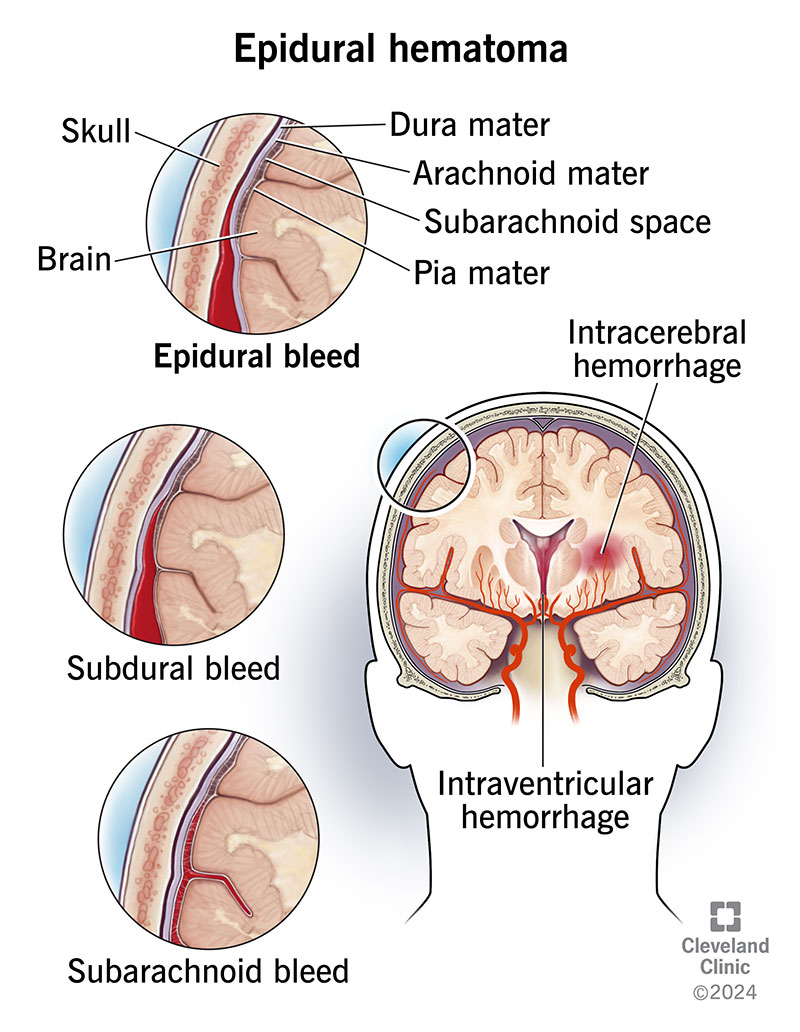
Image content: This image is available to view online.
View image online (https://nail-vitality.co/-/scassets/images/org/health/articles/22034-epidural-hematoma-01%3C%21-- -->)
An epidural hematoma (EDH) is a collection of blood inside your skull around your brain. It’s a type of life-threatening brain bleed.
Advertisement
Cleveland Clinic is a non-profit academic medical center. Advertising on our site helps support our mission. We do not endorse non-Cleveland Clinic products or services. Policy
Epidural hematomas happen when a blood vessel in your skull breaks or tears. The broken vessel bleeds into the thick membrane that covers your brain (the dura mater). The blood pools and gets trapped under your dura mater. This puts extra pressure on your brain and can cause serious brain damage.
The dura also covers your spinal cord. Epidural hematomas can happen around your spinal cord, too (spinal epidural hematoma). But an EDH almost always refers to a bleed inside your skull.
When you have an epidural hematoma, you may experience a brief loss of consciousness after head trauma. A period of alertness follows, lasting for several hours. Then, you may have a loss of consciousness with a decline in brain function.
Other signs and symptoms of an EDH include:
If you don’t get treatment right away, the bleeding in your skull can continue to put pressure on your brain and cause more severe symptoms, including:
An untreated EDH can be fatal if blood puts too much pressure on your brain.
Skull fractures are the most common cause of epidural hematomas. Experts estimate that 3 in 4 people who experience an EDH have a skull fracture. Any serious trauma or injury can break your skull, including:
Advertisement
Other causes of epidural hematomas are much less common, but can include:
Epidural hematomas are most common in people between the ages of 20 and 30.
Your dura mater is looser and more flexible when you’re a young adult. This can make the blood vessels attached to it more likely to break or tear during an injury. As you age, your dura mater loses some of its flexibility and grows more closely connected to your skull.
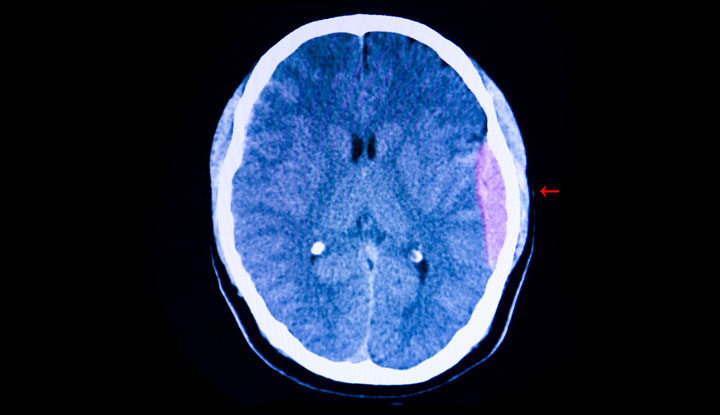
Image content: This image is available to view online.
View image online (https://nail-vitality.co/-/scassets/images/org/health/articles/22034-epidural-hematoma-02%3C%21-- -->)
A healthcare provider will diagnose an EDH with imaging tests. They’ll use a CT scan or MRI to take pictures of your skull and brain. You might need an angiogram if your provider thinks you have a hematoma that isn’t from an injury.
Your provider will also do a physical and a neurological exam. You might need a skull X-ray to diagnose a head injury, like a skull fracture.
A provider will try to stop the bleeding and drain the built-up blood inside your skull. This may reduce your risk of brain damage.
You’ll probably need surgery to relieve the increased intracranial pressure inside your skull. The two most common EDH surgeries include:
Occasionally, a small epidural hematoma may not require surgery. Your provider will make sure you’re not in immediate danger and that the EDH isn’t causing any symptoms. You’ll need to stay in the hospital for a few days so they can monitor it.
Your provider will give you follow-up neurological exams and CT scans every few hours to monitor the bleeding. If the hematoma gets bigger, you’ll need surgery to remove it.
In most cases, you’ll need at least one kind of rehab therapy after surgery, including:
An epidural hematoma is a very serious, potentially life-threatening condition that requires immediate medical care. Chances of survival increase the faster you get a diagnosis and treatment.
Advertisement
It’s hard for experts to estimate a survival rate that applies to everyone.
Your outlook will depend on a few factors, including:
Most people recover without long-term complications. Having severe symptoms (especially a coma) can affect your chances of survival. Your healthcare provider will tell you what to expect based on your unique situation.
An epidural hematoma (EDH) is a dangerous medical emergency. Healthcare providers and surgeons will manage the bleeding in your skull and try to prevent it from damaging your brain.
Experiencing an EDH can be scary, but they’re usually treatable. As long as you see a provider right away, you should fully recover. Healing and rehab can be hard work. Give yourself credit for every step of progress you make along the way. Some days may feel harder than others. But they’ll all add up to help you feel like yourself again.
Advertisement




Sign up for our Health Essentials emails for expert guidance on nutrition, fitness, sleep, skin care and more.
Learn more about the Health Library and our editorial process.
Cleveland Clinic’s health articles are based on evidence-backed information and review by medical professionals to ensure accuracy, reliability and up-to-date clinical standards.
Cleveland Clinic’s health articles are based on evidence-backed information and review by medical professionals to ensure accuracy, reliability and up-to-date clinical standards.
The neurosurgery care team at Cleveland Clinic helps find solutions for your brain, spine and nerves — whether that means surgery or not.