Choroideremia is a genetic condition that makes you lose parts of your vision throughout life. You lose vision progressively as you age. Some people lose all vision in adulthood. There’s currently no cure, but an eye doctor can help you manage vision changes. You may be able to try gene therapy or clinical trials.
Advertisement
Cleveland Clinic is a non-profit academic medical center. Advertising on our site helps support our mission. We do not endorse non-Cleveland Clinic products or services. Policy
Choroideremia is a rare genetic eye condition that makes you lose your vision slowly over time. Eventually, it can lead to blindness.
Advertisement
Cleveland Clinic is a non-profit academic medical center. Advertising on our site helps support our mission. We do not endorse non-Cleveland Clinic products or services. Policy
When you have choroideremia, certain tissues in your eyes — which are responsible for helping you see — break down. These include your:
These important tissues will be unstable and break down throughout your life. That’s what causes the changes in your vision. As these cells come apart, they can’t deliver light information to your optic nerve and brain like they should.
Your eye doctor can help you manage vision loss as it happens. But there’s currently no cure for choroideremia. And there’s no way to stop it once it starts. You may be able to participate in clinical trials as researchers try to find a way to reverse this condition or slow its progression.
Losing vision over time is the main symptom of choroideremia. This often first shows up in young children. Kids in early stages won’t be able to see well at night or in the dark. Visit an eye doctor as soon as your child notices any change in their vision, or if it seems like they’re struggling to see clearly.
Choroideremia is progressive. That means it gets worse in stages. Vision loss usually happens in this order:
Advertisement
Not everyone with choroideremia progresses through all these stages. Most people end up losing at least some of their peripheral vision. You may also lose color vision or develop blurry vision.
Choroideremia is a genetic condition. That means a genetic change causes it. Specifically, there’s a change or error in the CHM gene.
Normally, this gene helps your body know where to use certain proteins to build cells and tissues. Choroideremia can happen if you have a CHM gene that doesn’t work like it should. This can make your body build cells in your eyes incorrectly.
Choroideremia most often affects males. Females can have this condition, but it’s much less common and involves milder symptoms.
Choroideremia is an X-linked disorder. This means the faulty CHM gene is located on an X chromosome.
Males only have one X chromosome. Females have two. So, if a male has a faulty CHM gene, it’s much more likely to cause problems. If a female has the gene change in one X chromosome but not the other, the one correct CHM gene can limit choroideremia’s impact.
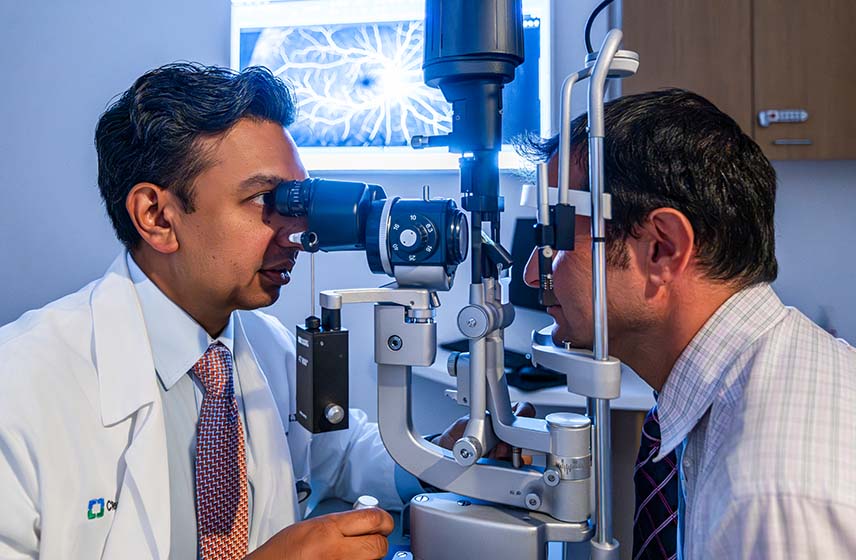
An eye doctor will be able to see damaged or faulty tissue in your eyes with an eye exam. They may use a few tests to look inside your eyes, including:
Genetic testing is the only way to confirm that you have a changed CHM gene.
Your eye doctor will suggest ways to manage vision loss. At first, you may need glasses or contacts. As you lose more of your vision, you might need magnifiers and other low vision aids.
There’s currently no way to cure choroideremia or stop it from progressing. Researchers are studying new possible treatments.
Your eye doctor might talk with you about gene therapy. These are treatments for genetic disorders. There isn’t a way to correct a changed CHM gene right now, but there may be options in the future.
Visit an eye doctor as soon as you notice any changes in your eyes or vision, especially if they happen suddenly. Ask your eye doctor how often you’ll need eye exams.
You should expect to lose some or all of your vision over the course of your life. It usually happens in stages as you age. Your peripheral vision will get worse first, followed by the rest of your vision.
It can take decades between these steps. And not everyone ends up losing all their vision. Your eye doctor will tell you what to expect. They’ll help you plan for the future.
Advertisement
Your eye doctor may also suggest a clinical trial. If you’re eligible, you may get access to new treatments that are still in the trial or testing phase.
Your eye doctor may refer you to a low vision specialist. This is an eye doctor who has specific training in helping people with permanent vision issues.
Finding out you have a condition that can’t be reversed can be upsetting and stressful. Talk to your eye doctor about all your concerns and questions. They’ll help you understand what’s happening and what you might expect. They can also suggest resources and support groups if you’re interested in talking to other people about living with choroideremia.
Researchers are always looking for new and better treatments. There may not be a cure today, but there’s a chance new treatments could become available in the future.
Advertisement




Sign up for our Health Essentials emails for expert guidance on nutrition, fitness, sleep, skin care and more.
Learn more about the Health Library and our editorial process.
Cleveland Clinic’s health articles are based on evidence-backed information and review by medical professionals to ensure accuracy, reliability and up-to-date clinical standards.
Cleveland Clinic’s health articles are based on evidence-backed information and review by medical professionals to ensure accuracy, reliability and up-to-date clinical standards.
Cleveland Clinic’s ophthalmologists and optometrists have the highest training available. We provide exams, vision correction and care for many eye conditions.