“Reactive airway disease” (RAD) is a term healthcare providers use to describe asthma-like breathing problems when they don’t know the exact cause. It isn’t an official diagnosis. Symptoms include coughing and wheezing.
Advertisement
Cleveland Clinic is a non-profit academic medical center. Advertising on our site helps support our mission. We do not endorse non-Cleveland Clinic products or services. Policy
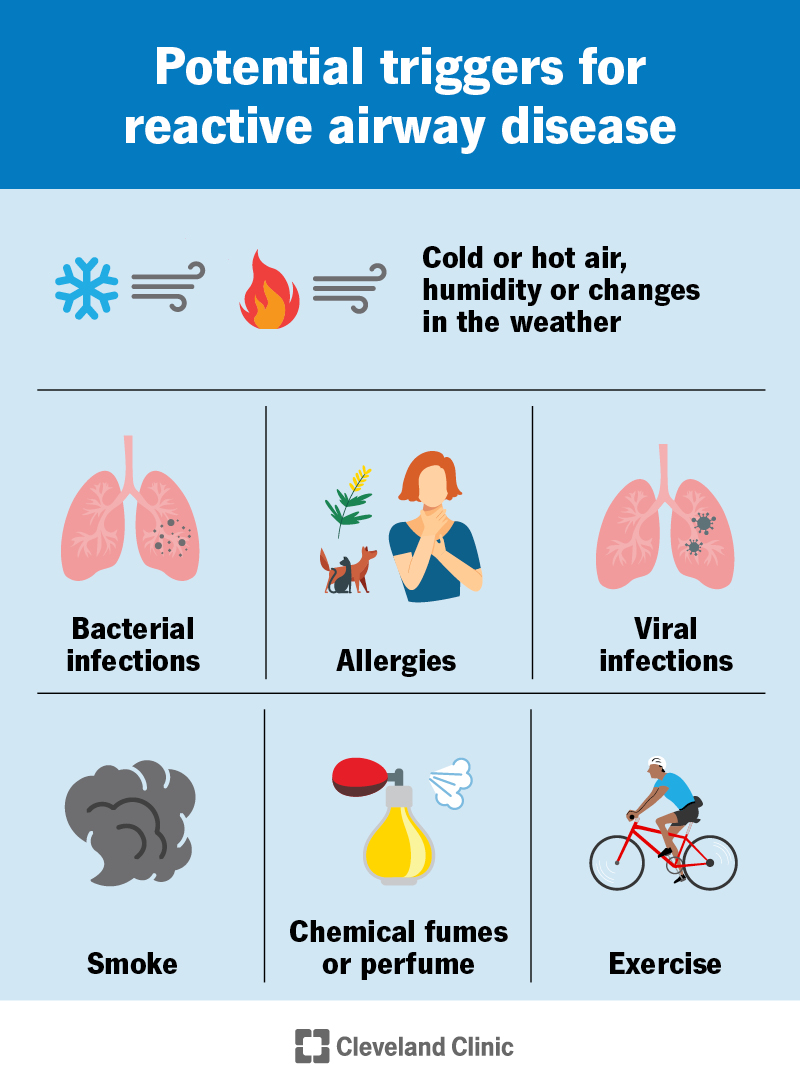
Image content: This image is available to view online.
View image online (https://nail-vitality.co/-/scassets/images/org/health/articles/reactive-airway-disease%3C%21-- -->)
“Reactive airway disease” (RAD) is a term that healthcare providers use to describe asthma-like breathing symptoms when they don’t know the cause. The symptoms happen when the tubes that lead to your lungs (airways) swell and narrow. This makes it hard to breathe.
Advertisement
Cleveland Clinic is a non-profit academic medical center. Advertising on our site helps support our mission. We do not endorse non-Cleveland Clinic products or services. Policy
RAD isn’t an official diagnosis, and it doesn’t have a precise definition. It means that an unknown condition is affecting your breathing.
A healthcare provider may use the term “Reactive airway disease” for anyone who has breathing problems without a clear cause. But most of the time, they use it for infants and children who are too young to take a lung function test and get a more specific diagnosis.
Some providers use “RAD” and “asthma” interchangeably, but they’re not the same. Despite the similar name, RAD is also different from reactive airways dysfunction syndrome (RADS). Reactive airway disease should only be a placeholder term until you get an official diagnosis.
Reactive airway disease symptoms include:
Triggers for reactive airway symptoms include:
Depending on the cause of reactive airway disease, you could be at risk for a serious asthma attack or anaphylaxis. Anaphylaxis is a life-threatening allergic reaction.
A provider will ask you about your symptoms and medical history and do a physical examination. They’ll listen to your lungs with a stethoscope. They may order tests to determine the cause of your symptoms, including:
Advertisement
If your provider can’t determine the cause or make a diagnosis right away, they may say you have reactive airway disease.
Treatment for reactive airway disease depends on the official diagnosis. You or your child might be treated with:
Talk to a healthcare provider if you or your child has symptoms that affect your breathing or if you have a cough that won’t go away.
Call your local emergency number or get to an emergency room right away if your symptoms aren’t responding to breathing treatments or you have:
If you have reactive airway symptoms, what you can expect depends on the cause and a definitive diagnosis. Sometimes, people will eventually get an asthma diagnosis or learn they have another condition that affects their airways. Other times, the reactions may stop happening (this is more likely in young kids).
You might need to see a healthcare provider who specializes in lung conditions (pulmonologist). They can let you know what to expect.
It depends on the underlying cause of your symptoms. Many conditions are manageable with treatment or by avoiding triggers. Some can be lifelong and may worsen over time.
The best way to lower your risk of airway diseases is to:
People sometimes use “reactive airway disease” and “asthma” interchangeably, but they’re not the same. Asthma is a chronic condition that irritates and narrows your airways. Reactive airway disease is a placeholder term providers use when something is affecting your airways, but they aren’t sure of the exact cause.
Advertisement
Healthcare providers may sometimes describe COPD symptoms as reactive airway disease. But COPD (chronic obstructive pulmonary disease) is a specific diagnosis for chronic lung conditions that block your breathing. Providers may describe a condition — including COPD — as RAD until they can make an official diagnosis.
Doctors can’t always pinpoint a diagnosis, especially in young kids. So sometimes, placeholder words like “reactive airway disease” help describe the issue until there’s an official diagnosis. This might feel frustrating. But your provider can still help you manage your symptoms, work with you to learn possible triggers and keep you safe from serious reactions.
Advertisement




Sign up for our Health Essentials emails for expert guidance on nutrition, fitness, sleep, skin care and more.
Learn more about the Health Library and our editorial process.
Cleveland Clinic’s health articles are based on evidence-backed information and review by medical professionals to ensure accuracy, reliability and up-to-date clinical standards.
Cleveland Clinic’s health articles are based on evidence-backed information and review by medical professionals to ensure accuracy, reliability and up-to-date clinical standards.
Breathing issues can affect your life in many ways. Cleveland Clinic’s respiratory therapy program treats your symptoms so you can feel better day to day.