HER2-positive (HER2+) breast cancer is an aggressive cancer. It causes symptoms like hard lumps in your breast, blood-stained discharge from your nipple or skin changes. Treatments include surgery, targeted therapy and chemotherapy. Early diagnosis and treatment may cure HER2+ breast cancer.
Advertisement
Cleveland Clinic is a non-profit academic medical center. Advertising on our site helps support our mission. We do not endorse non-Cleveland Clinic products or services. Policy
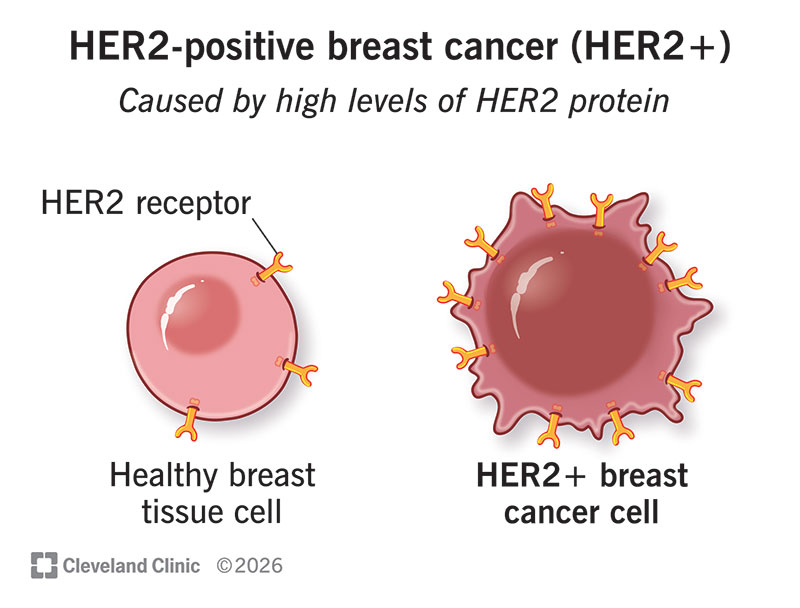
Image content: This image is available to view online.
View image online (https://nail-vitality.co/-/scassets/images/org/health/articles/25213-her2-positive-breast-cancer%3C%21-- -->)
HER2-positive (HER2+) breast cancer is a fast-growing cancer. It happens when you have high levels of human epidermal growth factor receptor 2 (HER2). This is a protein that helps cancer cells grow and divide.
Advertisement
Cleveland Clinic is a non-profit academic medical center. Advertising on our site helps support our mission. We do not endorse non-Cleveland Clinic products or services. Policy
Experts estimate that 1 out of every 5 breast cancer cases are HER2-positive. Surgery and medication that targets the HER2 protein may cure it, especially if the cancer hasn’t spread beyond your breast.
HER2-positive breast cancer doesn’t cause distinct symptoms. You may have common breast cancer symptoms, including:
This disease happens when the HER2 gene gains extra copies. This is called ERBB2 amplification. The HER2 gene makes HER2 proteins. All breast cells have HER2 proteins that manage breast cell growth and repair. The proteins make sure cells divide as needed to replace damaged or dying cells.
When the HER2 gene makes too many copies of itself, you start to have more abnormal genes. And this means you have more proteins telling breast cells to multiply. You don’t normally inherit the extra genetic copies from your biological parents. It happens after you’re born.
Genetic changes that lead to cancer may happen for several reasons. Experts don’t know why HER2 genes change. But they know there are some conditions that increase your overall risk of developing breast cancer.
Advertisement
HER2-positive risk factors are similar to those for other types of breast cancer. You may have an increased risk of if you:
The main complication is that cancer cells in your breast can quickly spread into your bloodstream and lymphatic system to reach your:
If tests show you have breast cancer, your healthcare provider will perform specific tests to check if it’s HER2-positive. These include:
Healthcare providers typically treat this cancer with a combination of surgery, targeted therapy and chemotherapy.
Breast cancer surgery is an option if cancer hasn’t spread outside of your breast. You may have chemotherapy or HER2 targeted therapy before surgery to shrink the tumor.
These medications target the protein that drives HER2+ breast cancer. Some specific medications include:
A breast cancer diagnosis and treatment can be stressful. It’s normal to feel anxious or depressed. And you may feel like you should keep your worries to yourself instead of sharing them with a friend or family member. If you’re in this situation, ask your cancer care team about mental health and community-based support.
Your recovery will depend on your treatment. For example, it may take a few weeks to fully recover from breast cancer surgery. It may take less time to recover from cancer medication side effects.
Advertisement
Your cancer care team will explain how different treatments may affect you and how they’ll help manage them.
You’ll see your provider regularly as you go through treatment. But you should contact them if you have trouble managing side effects.
Let your provider know about any changes in your breasts or overall health. For example, breast cancer that’s spread to your lungs may cause symptoms like chest pain, frequent chest infections, feeling short of breath or coughing up blood.
Survival rates are estimates of the percentage of people with a specific cancer diagnosis who are alive after a certain amount of time — usually five years after receiving the diagnosis.
HER2-positive breast cancer survival rates may vary depending on whether the cancer is hormone receptor-positive (HR+) or hormone receptor-negative (HR-). These are receptors on cells that can attach to hormones. About half of all HER2-positive breast cancers have these receptors.
In the U.S., the National Cancer Institute (NCI) organizes survival rates by stages: local, regional and distant. Here are the five-year relative survival rates for HER2+ breast cancer, according to NCI data:
Advertisement
A relative survival rate shows whether a specific cancer shortens life. It compares the survival rates of people who have a specific type of cancer with the survival rates of those who don’t have cancer but are the same age, sex and race.
Survival rate information can be confusing and sometimes concerning. Keep in mind the rates are based on others’ experiences with HER+ breast cancer. What was true for them may not be true for you. Your experience may be very different. Ask your cancer care team to explain what survival rate data means in your situation.
Yes, treatment that gets rid of cancer before it spreads may cure it. But this type of breast cancer can come back even after successful treatment.
No, you can’t prevent this disease. It happens when the HER2 gene changes. Researchers are still studying why that happens and are not sure how to specifically prevent HER2-positive breast cancer.
While you can’t prevent it, managing your breast health increases the chance that you or your healthcare provider will notice changes in your breasts that could be cancer. Here are some steps you can take:
Advertisement
A HER2+ breast cancer diagnosis may feel like a tough one-two punch. First, you find out the lump in your breast is a fast-growing cancerous tumor. Second, you learn you may need surgery and other treatment right away to keep the tumor from spreading.
That’s a lot of worrisome news to process. Take a breath. Then, consider asking a trusted friend or family member to help you sort through the flood of information coming your way. Be sure to ask your healthcare providers to explain their recommendations and how treatment may affect you.




Sign up for our Health Essentials emails for expert guidance on nutrition, fitness, sleep, skin care and more.
Learn more about the Health Library and our editorial process.
Cleveland Clinic’s health articles are based on evidence-backed information and review by medical professionals to ensure accuracy, reliability and up-to-date clinical standards.
Cleveland Clinic’s health articles are based on evidence-backed information and review by medical professionals to ensure accuracy, reliability and up-to-date clinical standards.
A breast cancer diagnosis can turn your world upside down. At Cleveland Clinic, we offer expertise, compassion and personalized treatment plans.