Overjet refers to a type of malocclusion (bad bite). The more common name for it is buck teeth. It happens when your upper front teeth stick out more than they should. You may need treatment if it causes symptoms or might lead to complications, like jaw pain or tooth erosion. An orthodontist can fix overjet with orthodontics or oral surgery.
Advertisement
Cleveland Clinic is a non-profit academic medical center. Advertising on our site helps support our mission. We do not endorse non-Cleveland Clinic products or services. Policy
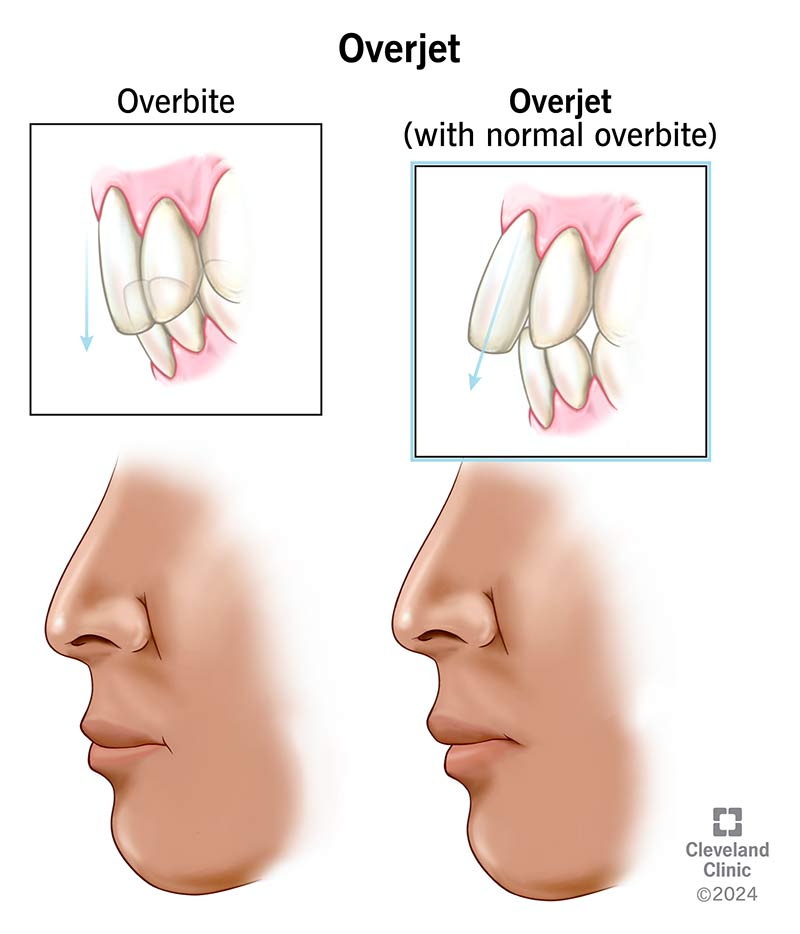
Image content: This image is available to view online.
View image online (https://nail-vitality.co/-/scassets/Images/org/health/articles/overjet%3C%21-- -->)
Overjet describes a type of malocclusion (tooth misalignment). It happens when your upper front teeth protrude, or stick out, further than they should. You may hear people refer to an overjet as “buck teeth.”
Advertisement
Cleveland Clinic is a non-profit academic medical center. Advertising on our site helps support our mission. We do not endorse non-Cleveland Clinic products or services. Policy
Most people’s upper front teeth protrude past their lower front teeth by about 2 millimeters. That’s what dentists consider normal. But if your teeth stick out more than 2 millimeters, that’s an overjet.
Appearance is a common concern among people with an overjet. Many worry that it negatively affects their smile. But an overjet can impact your oral health and function, too. When your teeth don’t fit together properly, it can cause chewing difficulties, jaw pain, headaches and other issues.
Braces can fix most overjet cases. But you might need other orthodontics or jaw surgery if you have a severe overjet (8 to 10 millimeters or more).
Many people say “overbite” when they really mean “overjet.” Both words refer to types of malocclusion, but they’re not the same. Overbite refers to vertical distance, while overjet refers to horizontal distance:
Advertisement
Symptoms vary depending on whether your teeth stick out a little or a lot. With buck teeth, you might have:
Different factors can cause buck teeth, including:
Buck teeth (and all types of malocclusion) may cause health issues that worsen with age. Left untreated, this type of bad bite can lead to:
Sometimes, buck teeth make people feel self-conscious about how their teeth look. This is especially the case with kids, who may tease a child with an overjet by using the term “buck-toothed” as an insult. But an overjet — like other types of malocclusion — is just a difference in how your teeth align. It’s not “bad,” but it can lead to health issues.
Many people do fine with an overjet. Your dentist can advise you on whether your or your child needs treatment.
A dentist can tell you if you have an overjet during a dental exam. They’ll measure the horizontal distance between your lower front teeth and upper front teeth. If your upper teeth stick out more than 2 millimeters, you might have buck teeth.
Your dentist may also need to take X-rays. Dental X-rays can give them important information about the health of your teeth and gums.
Treatments for buck teeth include:
Dentists and orthodontists consider many things when recommending treatment, like your age, how much of an overjet you have, and whether it interferes with oral health or chewing function. This helps them decide if you need treatment, and if so, what types.
Advertisement
You can’t fix buck teeth without orthodontics or surgery. But if appearance is your main concern, these cosmetic dentistry treatments may camouflage the issue:
It’s important to know that these procedures don’t correct the underlying condition. So, if an overjet interferes with oral health or function, you might need braces or surgery to get rid of buck teeth.
Tell your dentist if you have new symptoms like a toothache, facial pain or pain when chewing. You should also see your dentist for routine cleanings and exams. Preventive dental visits can reduce your risk for health issues related to an overjet.
Orthodontic treatment is the only way to fix buck teeth. An overjet won’t go away on its own.
In some cases, an overjet, or “buck teeth,” can cause health issues, like tooth pain, jaw pain and cavities. If that’s the case, a dental care provider can align your teeth with orthodontics or surgery. There are also options if misaligned teeth are causing you to feel self-conscious. Ask your dentist about ways to correct an overjet if it’s causing health issues or stress.
Advertisement




Sign up for our Health Essentials emails for expert guidance on nutrition, fitness, sleep, skin care and more.
Learn more about the Health Library and our editorial process.
Cleveland Clinic’s health articles are based on evidence-backed information and review by medical professionals to ensure accuracy, reliability and up-to-date clinical standards.
Cleveland Clinic’s health articles are based on evidence-backed information and review by medical professionals to ensure accuracy, reliability and up-to-date clinical standards.
Dentistry plays an important role in oral health. Cleveland Clinic’s experts can design a personalized plan that will keep you smiling for the long haul.