Connecting Rehabilitation, Research and Innovation
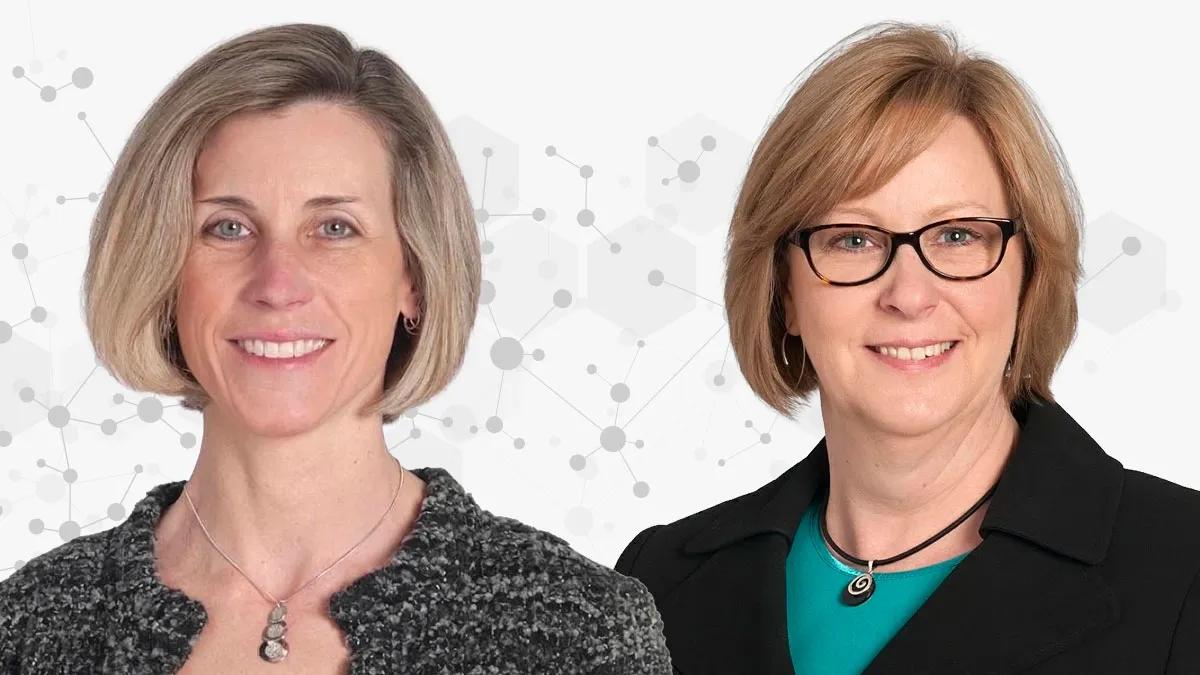
Susan Linder, PT, DPT, PhD, and Karen Green, PT, DPT, highlight how research and innovation are transforming approaches to neurological rehabilitation.
Advertisement
Cleveland Clinic is a non-profit academic medical center. Advertising on our site helps support our mission. We do not endorse non-Cleveland Clinic products or services. Policy
Recent Episodes
Advancing Recovery Through Early Mobilization in Neuro Care
Adam Barron, MD, and Natalie Lilly, PT, DPT, explore the evolving evidence behind early mobilization in neurocritical care.
Learnings of having Embedded Psychiatrists in Neurological Clinics
Drew Cumming, MD, reviews the impact of embedded psychiatry in neurology and the benefits of integrating behavioral health expertise into th…
Behavioral Health Protocols for Suicidal Ideation
Brianne Markley, PhD, explains how screening tools, risk assessment and safety planning can help clinicians recognize and respond to suicida…
Video content: This video is available to watch online.
View video online (https://cdnapisec.kaltura.com/p/2207941/sp/220794100/playManifest/entryId/1_s0nyy44l/flavorId/1_5f3sgelj/format/url/protocol/https/a.mp4)
Transcript
Neuro Pathways Podcast Series
Advertisement
Cleveland Clinic is a non-profit academic medical center. Advertising on our site helps support our mission. We do not endorse non-Cleveland Clinic products or services. Policy
Release Date: November 1, 2026
Expiration Date: October 31, 2027
Estimated Time of Completion: 30 minutes
Connecting Rehabilitation, Research and Innovation
Susan Linder, PT, DPT and Karen Green PT, DPT
Description
Each podcast in the Neurological Institute series provides a brief, review of management strategies related to the topic.
Learning Objectives
- Review up to date and clinically pertinent topics related to neurological disease
- Discuss advances in the field of neurological diseases
- Describe options for the treatment and care of various neurological disease
Target Audience
Physicians and Advanced Practice providers in Family Practice, Internal Medicine & Subspecialties, Neurology, Nursing, Pediatrics, Psychology/Psychiatry, Radiology as well as Professors, Researchers, and Students.
Accreditation
In support of improving patient care, Cleveland Clinic Center for Continuing Education is jointly accredited by the Accreditation Council for Continuing Medical Education (ACCME), the Accreditation Council for Pharmacy Education (ACPE), and the American Nurses Credentialing Center (ANCC), to provide continuing education for the healthcare team.
CREDIT DESIGNATION
- American Medical Association (AMA)
Cleveland Clinic Center for Continuing Education designates this enduring material for a maximum of 0.50 AMA PRA Category 1 Credits™. Physicians should claim only the credit commensurate with the extent of their participation in the activity.
Participants claiming CME credit from this activity may submit the credit hours to the American Osteopathic Association for Category 2 credit. - American Nurses Credentialing Center (ANCC)
Cleveland Clinic Center for Continuing Education designates this enduring material for a maximum of 0.50 ANCC contact hours. - Certificate of Participation
A certificate of participation will be provided to other health care professionals for requesting credits in accordance with their professional boards and/or associations. - American Board of Surgery (ABS)
Successful completion of this CME activity enables the learner to earn credit toward the CME requirements of the American Board of Surgery’s Continuous Certification program. It is the CME activity provider's responsibility to submit learner completion information to ACCME for the purpose of granting ABS credit.
Advertisement
Credit will be reported within 30 days of claiming credit.
Podcast Series Director
Andreas Alexopoulos, MD, MPH
Epilepsy Center
Additional Planner/Reviewer
Ari Newman, BSN
Faculty
Susan Linder, PT, DPT
Mellen Center
Karen Green PT, DPT
Rehab Hospital
Host
Glen Stevens, DO, PhD
Cleveland Clinic Brain Tumor and Neuro-Oncology Center
Agenda
Connecting Rehabilitation, Research and Innovation
Susan Linder, PT, DPT and Karen Green PT, DPT
Disclosures
In accordance with the Standards for Integrity and Independence issued by the Accreditation Council for Continuing Medical Education (ACCME), The Cleveland Clinic Center for Continuing Education mitigates all relevant conflicts of interest to ensure CME activities are free of commercial bias.
The following faculty have indicated that they may have a relationship, which in the context of their presentation(s), could be perceived as a potential conflict of interest:
Glen Stevens, DO, PhD
| Company | Relationship |
|---|---|
| DynaMed | Consulting |
| Company | |
| DynaMed | |
| Relationship | |
| Consulting |
Susan Linder, PhD
| Company | Relationship |
|---|---|
| Enspire | Consulting |
| Neurologix | Intellectual property rights (Royalties or patent sales) |
| Qr8 Health | Intellectual property rights (Royalties or patent sales) |
| Company | |
| Enspire | |
| Relationship | |
| Consulting | |
| Neurologix | |
| Relationship | |
| Intellectual property rights (Royalties or patent sales) | |
| Qr8 Health | |
| Relationship | |
| Intellectual property rights (Royalties or patent sales) |
All other individuals have indicated no relationship which, in the context of their involvement, could be perceived as a potential conflict of interest.
CME Disclaimer
The information in this educational activity is provided for general medical education purposes only and is not meant to substitute for the independent medical judgment of a physician relative to diagnostic and treatment options of a specific patient's medical condition. The viewpoints expressed in this CME activity are those of the authors/faculty. They do not represent an endorsement by The Cleveland Clinic Foundation. In no event will The Cleveland Clinic Foundation be liable for any decision made or action taken in reliance upon the information provided through this CME activity.
HOW TO OBTAIN AMA PRA Category 1 Credits™, ANCC Contact Hours, OR CERTIFICATE OF PARTICIPATION:
Go to: Neuro Pathways Podcast November 1, 2026 to log into myCME and begin the activity evaluation and print your certificate If you need assistance, contact the CME office at myCME@ccf.org.
Copyright ©2026 The Cleveland Clinic Foundation. All Rights Reserved.
Introduction:
NeuroPathways, a Cleveland Clinic podcast exploring the latest research discoveries and clinical advances in the fields of neurology, neurosurgery, neuro rehab, and psychiatry.
Glen Stevens, DO, PhD:
Rehabilitation is entering a new era where clinical care research and innovation are more connected than ever before. By bringing clinicians, researchers, and advanced technologies together, new opportunities are emerging to accelerate discovery and expand access to cutting edge therapies for patients. I'm your host, Glenn Stevens, neurologist, neuro-oncologist in Cleveland Clinic's Neurological Institute. Today I'm joined by Dr. Susan Linder, Director of Clinical Research in Physical Medicine and Rehabilitation, and Dr. Karen Green, Senior Director of Rehabilitation at Cleveland Clinic. Susan and Karen, welcome to NeuroPathways.
Susan Linder, PT, DPT, PhD:
Thank you.
Karen Green, PT, DPT:
Thank you so much.
Advertisement
Glen Stevens, DO, PhD:
Before we get started, I'd like you guys to introduce yourselves, tell us a little bit about your background, what you do at the clinic on a daily basis, and Susan, we'll start with you first.
Susan Linder, PT, DPT, PhD:
All right. So again, my name is Susan Linder. I'm a physical therapist by training. I have a PhD, so the last 16 years of my career, I have worked exclusively in rehabilitation research.
Glen Stevens, DO, PhD:
Okay. And Karen?
Karen Green, PT, DPT:
I'm Karen Green. I'm a physical therapist by trade and the senior director of rehabilitation at Cleveland Clinic. I'm a lifer at the Cleveland Clinic. I've been here 36 years. I'm working on 37 right now, so it's great to be with you today.
Glen Stevens, DO, PhD:
Well, Karen, I think you're a year ahead of me, so congratulations on that.
Susan Linder, PT, DPT, PhD:
Three years ahead of me.
Glen Stevens, DO, PhD:
It's the old timers.
Karen Green, PT, DPT:
I'm the old lady in the room. Yeah,
Glen Stevens, DO, PhD:
It's the old timers meeting. So rehabilitative medicine is rapidly evolving. I don't need to tell you guys you're in it. What makes this an exciting time for innovation and rehabilitative care? And Susan, again, I'll pick on you because you're sitting beside me.
Susan Linder, PT, DPT, PhD:
So as many people might know, there is a beautiful million square foot new neurological institute building being built on our main campus. And this isn't just a new building, but it provides tremendous opportunity for full clinical integration of research. And that's what we're really excited about where researchers and clinicians can work side by side to bring really amazing opportunities for our patients.
Advertisement
Glen Stevens, DO, PhD:
Karen, anything to add to that?
Karen Green, PT, DPT:
Absolutely. I think this is a wonderful idea of combining both the clinical research and the clinicians and the patients all in one location where we can all be involved and see what each other is doing. And I think it'll lead to really informed research that can really exist in the clinical format as well.
Glen Stevens, DO, PhD:
And the inspiration for this or it just was a natural marriage of the individuals, "Hey, we got a new space. Everybody's here. Let's just do it."
Karen Green, PT, DPT:
Yeah. As we were looking at what could be possible in this new building, the topic of integrating rehab care and rehab research came up and I was all on board and I think we've created a space where we can all coexist and influence what the others do.
Glen Stevens, DO, PhD:
I mean, you guys must be excited because my understanding is we have a couple of spots in the new buildings where they're going to do a gait analysis on everybody. And why don't you talk about that a little bit? Are you going to be using that data?
Susan Linder, PT, DPT, PhD:
We will be using that data and that will be used by really all of the centers, including physical therapy. And importantly, what that allows us to do, because our therapists work on gait training, for example, in many avenues and across many diagnoses, the therapists can immediately be informed of the effects of their interventions with this gait analysis.
Advertisement
Glen Stevens, DO, PhD:
Karen, any additional thoughts about the gait analysis?
Karen Green, PT, DPT:
Yes. I think it's really exciting because as a therapist prepares to see their patient in the clinic, we'll have this information that has just been taken available to us. So it'll make it really efficient for us to see progress that the patient is making in both their gait speed or any gait abnormalities just with the click of a button right in Epic.
Susan Linder, PT, DPT, PhD:
Yes. One more point to that. So I think one really exciting thing is to be able to stratify individuals who might be at risk for things like falls. And this again goes across so many diagnoses. So physicians, clinicians, and other centers can identify a patient who might benefit from therapy services. And that's something we don't currently have.
Glen Stevens, DO, PhD:
I've admitted this on a different podcast before, but when my kids were young and we would travel around, I'm a real observer of person movement and my kids who are not in medicine at all have become excellent at looking at a gait and diagnosing what the problem is. They say if you could only do one evaluation on a patient, it would just be watching them walk because it would reveal so many different disorders. And I hate to say it, I still do it to this day. I was just recently on vacation in Italy and I would be sitting down and resting at a piazza and just observing patients. And I see people that have a foot drop, somebody that's got a shuffling gait and these types of things. So it's really impressive. And I hate to say it, but as we get older, falling is a big risk. And if we can decrease or identify individuals at risk and then get them on some type of program or therapy, strengthen balancing, those types of things, I think we're doing them a real service. So I think this is great information that we're getting on everybody and the future will hold how much it's really enriching our patient experience.
Susan Linder, PT, DPT, PhD:
Absolutely. I think it really creates this living laboratory where this measurement system is integrated into clinical practice, but then used for not just clinical use, but for research as well.
Glen Stevens, DO, PhD:
So I thought we'd get into trying to, what can we do to improve patient outcome? And I know that there's been a lot of interest in stroke and stroke rehabilitation. And in the old days, you had a stroke, you're in the hospital, we'd put you in bed for 10 days and give you a cigarette. I think we all realize that's probably not a good thing to do nowadays and it's sort of get up and get moving and those types of things. Talk to me about the concept of neuromodulation.
Susan Linder, PT, DPT, PhD:
No, that's a great question. So neuromodulation has really exploded over the last 10 to 15 years, but it's not fully integrated into clinical practice yet. It's really truly in the research stages despite showing effectiveness or efficacy. There's a few instances where that is changing, however. So at the Cleveland Clinic, we have a few neuromodulation studies and we are looking at the effects of TMS or transcranial magnetic stimulation. We're also looking at the effects of deep brain stimulation in a first in human clinical trial.
Glen Stevens, DO, PhD:
And those are in stroke.
Susan Linder, PT, DPT, PhD:
Those are all in stroke. And we are also looking at the effects of aerobic exercise, which might not seem like a neuromodulator, but aerobic exercise really changes the physiology of the brain to improve neuroplasticity. So a few of these approaches we can already integrate into clinical practice, aerobic exercise, for example. Like I said, the other two are still in the investigation phases. However, there is an approach that has been FDA approved and that's vagus nerve stimulation. So we worked to implement vagus nerve stimulation into the clinical setting in rehabilitation at the Mellon Center.
Glen Stevens, DO, PhD:
Well, we've talked again on this podcast about it before, but I think it's quite fascinating that you'll get patients with Parkinson's disease and you'll have them doing cycling exercise, those types of things, and their Parkinson's symptoms are better for some period of time after the treatment. It's really quite amazing, right?
Susan Linder, PT, DPT, PhD:
It's fascinating. And I think we've looked at the effects of aerobic exercise on cardiovascular function for so long, but really only recently looked at the effects on brain function. And it's tremendous with respect to things like rehabilitation, but certainly for brain health longitudinally.
Glen Stevens, DO, PhD:
I know what answer I want you to tell me on this, Karen, but I assume that brain plasticity doesn't have an age limit, right? As we get older, we can always fix a little bit more or what do we know about that?
Karen Green, PT, DPT:
Correct. And it's actually been a myth for a long time in rehabilitation that there's kind of a very limited time to improve the function of patients after they've experienced something like a stroke. And we're learning more and more every year, especially from the research that's going on, is that neuroplasticity window is open for a very long time. And stroke patients even three, four, five years out are still making gains with really targeted approaches to changing their function. And I think the gait lab and things like that do for us in physical therapy is it gives us more time. Instead of measuring a gait speed, that's going to be there for us. And then we can look to improve the gait speed. We can look at improving the gait deviations, having the patient be safer when they walk and not take the time to remeasure that gait speed. It'll be there waiting for us.
Glen Stevens, DO, PhD:
And I just can't remember the number, but I know that if your walk speed within a certain distance is below a certain time period, your risk of fall is significantly increased. Yes, absolutely. And I think it will give us all that information, right?
Karen Green, PT, DPT:
Yes. And gait speed tells us other things as well. It tells us about whether a patient is going to be a community dweller. Are they going to be able to function outside their home environment or are they really limited to just being at home with a caregiver? So it tells us a lot of information. And even in acute care, which is also going to be in this new building, it helps us predict whether a patient will do well after a hospitalization in the home environment and be able to go to outpatient therapy.
Glen Stevens, DO, PhD:
Yeah, I think it's fascinating that we can measure all this kinetic activity without putting markers on people.
Susan Linder, PT, DPT, PhD:
Yeah. The advanced technologies with marker less motion capture systems is really amazing and it just makes this entirely possible.
Glen Stevens, DO, PhD:
Yeah. And then I guess the question is we'll all have to get used to how we look at this data on Epic, how it's presented to us and then understanding exactly what it means.
Susan Linder, PT, DPT, PhD:
Absolutely. I think the interpretation of it, there will be a learning curve associated with that, but we also know that this will create a pipeline of research so that we can even use predictive modeling and such to look to see what diseases people might be at risk for developing.
Glen Stevens, DO, PhD:
You mentioned the clinical trials looking at the vagus nerve stimulator and deep brain stimulation. My belief is, and you guys can correct me, is that it's mostly aimed at motor function.
Susan Linder, PT, DPT, PhD:
That is correct, yes.
Glen Stevens, DO, PhD:
Are there procedures or trials or things we are looking at that can affect sensory function or something, or is it all really just driving motor?
Susan Linder, PT, DPT, PhD:
It's primarily been looked at as far as driving motor function. There really aren't many trials looking at sensory function specifically, although in Cleveland Clinic research, there are some laboratories that are looking at sensory function in an isolated manner, but more as it relates to amputations and such and less to stroke.
Glen Stevens, DO, PhD:
Yeah. I mean, you can imagine I'm a cancer guy, so people take a lot of chemotherapies, they get neuropathies, their balance is very poor because their dorsal columns aren't so good. Now, I'm not sure that doing a stimulation is going to help your dorsal columns very much, but again, it may help with orientation or those types of things. I mean, you can see why motor would be the easy thing to do, but -
Susan Linder, PT, DPT, PhD:
Certainly, yeah. There's a huge gap though, both with clinical approaches to improving sensory function and research related to that.
Glen Stevens, DO, PhD:
The other thing that I thought was interesting, I was doing a little bit of reading on the DBS and we had somebody in previously talking about the DBS is that I, and I could be wrong, but I think that they're targeting a lot of areas in the cerebellum, which the dentate nucleus maybe, and I guess I'm not an anatomist. I would've thought, okay, motor function, I'm not sure the cerebellum is where I'm going, but I guess that's what works best, right?
Susan Linder, PT, DPT, PhD:
Yeah. So it's actually targeting the, I am always difficult in pronouncing this, the dentatothalamic cortical pathway. So from the dentate to the thalamus to the cortex. And with that targeted DBS and the stimulation parameters are patient specific. So they go through weeks of programming to make sure that they're having the optimal response to the DBS settings for neuroplasticity.
Glen Stevens, DO, PhD:
And I was very naive when I started in medicine and I thought, well, you have a stroke or something affecting your cerebellum, it's just going to be balanced. But with all these loops that are interacting, you start realizing people can get even into language problems with cerebellar strokes and those types of things. It's just so connected.
Susan Linder, PT, DPT, PhD:
Right. And these are cortical strokes that are still being impacted with the cerebellar stimulation.
Karen Green, PT, DPT:
And it's interesting that you bring up stroke as we're going to have an integrated therapy department in the new building with PT, OT, and speech all working in the same area as well. So we get to experience not just the physical therapy aspects that are improved by research, but the cognitive aspects and the speech and language aspects as well.
Glen Stevens, DO, PhD:
Yeah, I think it all makes sense, right? I mean, in brain tumor, we're sort of a one-stop shop. You don't have to go to another building to see the surgeon, to see the neuromedical oncologist, to see the radiation oncologist. It's all there. And I remember years ago when I wasn't doing tumor work, I did ALS work and they run multidisciplinary ALS clinics where they'll have the physical therapists, the occupational therapists there that have speech and swallow, all the individuals right there at that time. It really makes the most sense.
Susan Linder, PT, DPT, PhD:
Absolutely. This integrated model is really imperative with the neurological rehabilitation overall.
Glen Stevens, DO, PhD:
And I guess then you just have to decide what data is fruitful and what studies do you want to look at and what questions do you want to answer?
Susan Linder, PT, DPT, PhD:
Yeah, and this is where research has really functioned in a silo, and we're not the only ones that have experienced this, but really to have research inform clinical practice and clinical gaps inform research creates this nice cycle that we hope to achieve in the new building.
Glen Stevens, DO, PhD:
Yeah, and I think there's no reason it shouldn't. Again, in brain tumor, we have research embedded within our group. They just sit down from us just a little bit. So if I have a research question or a trial question, I can just go down and they see patients in clinic with us and it's really the way to go.
Susan Linder, PT, DPT, PhD:
Absolutely. And we're hoping that with this integration that it will also foster this pipeline of researchers where therapists are interested in research, but they don't necessarily know the avenues or have the resources to do that. So this way it can hopefully develop, again, this pipeline of clinical researchers.
Karen Green, PT, DPT:
And also, I think it's important to note too that it may inform the pipeline of patient participants in the research as well, because we'll have them in the building and we'll say, "Oh gosh, you're working on this and there's study that's going to happen here before too long. Would you be interested in that?" And so identifying the right patients for some of the ongoing research is going to be a plus in this collaborative approach as well.
Glen Stevens, DO, PhD:
I mean, having stroke in the same building as the people that are doing the neuromodulation techniques, obvious, right?
Susan Linder, PT, DPT, PhD:
Absolutely. And people are always looking. A lot of individuals, for example, with stroke or neurodegenerative conditions, they don't regain that function fully, so they're always looking for newer innovations and technologies that might get them to the next level of function.
Glen Stevens, DO, PhD:
So how soon can we start rehabilitation on people that have a stroke? Is it next day?
Karen Green, PT, DPT:
Yes. We start as early as possible in the hospital with patients and whether they're in the ICU or they're on a regular nursing floor. We start with PT, OT, and speech if necessary, and we work to get them up and mobile. And this new building is going to help us do that in the hospital as well. We'll have overhead lift systems and some dedicated therapy spaces where we can get these patients up and functioning as soon as possible.
Glen Stevens, DO, PhD:
Yeah, Karen, I think that's a really good point that you make. And I remember, I think it was Rob Bermel was here, he was maybe mentioning that. The lift system that they have up on the ceiling sounds fantastic, right? Because some people will be much more impaired than others and safety, safety, safety.
Karen Green, PT, DPT:
Right. But it's not just safety. It's also letting the patient test their limits, right? If we're holding on tight to them because we're afraid that they'll fall, they don't get to have the perturbations and recover themselves like they would if they're in a lift system. So we're really excited about this lift system will also adapt to elevations, and so we'll be able to take patients up and down stairs in a safe manner and have them feel those little losses of balance and be able to recover it themselves, but in a safe situation knowing that they won't fall.
Glen Stevens, DO, PhD:
So it's not going to be 10 days of bed rest and a cigarette?
Susan Linder, PT, DPT, PhD:
I think those days are behind us.
Glen Stevens, DO, PhD:
Hopefully they're behind us, right? Hopefully they're behind us there.
Susan Linder, PT, DPT, PhD:
Early mobilization is so critical for so many reasons, not just for recovery from stroke, but the cardiorespiratory benefits of being upright.
Glen Stevens, DO, PhD:
Yeah. I mean, those are the risks, right? Aspiration and clearing the lungs, blood clots, all those types of things. Early mobilization, I think everybody agrees, critical. Is there just a certain percentage of the physical therapy folks that will then live in the new building and others will be, or just hospital-based or how's that work?
Karen Green, PT, DPT:
Yeah, so floors eight through 12 will be acute care floors, and then the floors below that will be outpatient and physician clinics and things like that. And so we have a subspecialty of our very large acute care team at main campus that is on the neuro team, and most of them are neuro clinical specialists. They all have a lot of experience treating neuro patients, and that team will be moving over to the new building.
Glen Stevens, DO, PhD:
Let's say I'm a young, aspiring physical therapist and I want to get involved in this. How do I do that?
Karen Green, PT, DPT:
Absolutely. We'll monitor our jobs board. We have a fantastic jobs board where you can set up an alert and it'll tell you every time a physical therapy job starts out and gets posted. And so we are typically always hiring and we're looking for the best of the best. We're looking for people who are engaged and love a busy schedule and complicated patients and like a challenge, and we'd welcome you to our team.
Glen Stevens, DO, PhD:
I was chatting with my 14-year-old grandson recently. I asked him what he wanted to do, and he said he wanted to be a physical therapist.
Susan Linder, PT, DPT, PhD:
I love that.
Karen Green, PT, DPT:
Great.
Glen Stevens, DO, PhD:
Yeah. And I was talking to my 10-year-old granddaughter, and she wants to be an occupational therapist.
Karen Green, PT, DPT:
You are going to be all set.
Glen Stevens, DO, PhD:
So we'll get them enrolled early, right?
Susan Linder, PT, DPT, PhD:
Exactly.
Karen Green, PT, DPT:
Yeah. And I think it's a great idea too to find a mentor, find someone to help guide you through that process of what classes do you take in high school? What classes do you take in college to best prepare yourself for a degree and a career in rehabilitation?
Glen Stevens, DO, PhD:
Where do you see rehab going?
Karen Green, PT, DPT:
There are so many options. I think the earlier we're involved in these patients, we send the majority of our patients home from the hospital to then start outpatient as soon as possible. And so I think continuing to innovate what we can do in the acute care hospital, we're going to have some really exciting equipment opportunities to be able to get patients up and functioning and build their confidence back up in how they can move and that they can recover their life. And so it's really exciting to see those first steps of a new stroke patient as it really sinks in that, wow, I've had a stroke, this is going to change my life. But then realizing that they still have a life to live and we're going to help them do that as independently as possible.
Glen Stevens, DO, PhD:
So let's say I have a stroke, affects my right MCA, so my language isn't affected, but the left side of my body's not functioning very well. At what point would we decide that I might be a candidate for DBS or vagal nerve stimulation or some other type of therapy? I mean, I assume you need a period of time to see where the natural history is going, but when do we look at those types of things?
Susan Linder, PT, DPT, PhD:
Yeah, so there's usually about a six-month recovery window when they would say that spontaneous recovery or just a natural recourse of recovery has started to slow. Now again, as we mentioned, that doesn't stop as the brain can continue to learn, but it's with intention and it's with focused skilled rehabilitation. So typically people go through home therapy, outpatient therapy, and then it's a good time to start looking at clinical trials. So at the Cleveland Clinic, we are enrolling people who are three to nine months post-stroke in some rehabilitation trials. Those are related to exercise and improving function of the upper and lower limb. So if that was your case, then that would be a great trial to embark on. After that is when we would look to some of the more invasive therapeutic options if people are interested, like vagus nerve stimulation or DBS. So usually more in the chronic phase though, anywhere from really nine to nine plus months post-recovery.
Glen Stevens, DO, PhD:
Across the country, how accessible are these things for individuals? Is it very difficult for them to find therapists to do these types of things or it's easy to find?
Susan Linder, PT, DPT, PhD:
The more invasive approaches are not as accessible to people. It's really large academic medical institutions that have the infrastructure, the knowledge, and the training to enroll people in studies for DBS. There are 11 sites across the US that are enrolling and vagus nerve stimulation, since that's FDA approved, it's still a controlled release where the sponsor or the vendor works with institutions specifically. So we're fortunate really to have both of those as options for our patients should they choose to proceed with those.
Glen Stevens, DO, PhD:
Karen, any thoughts on that?
Karen Green, PT, DPT:
Yeah, I think we're very lucky in the Cleveland area to have such innovations available to our patients and not just patients in Cleveland, patients across the whole Northeastern mid-state area to be able to take advantage of it. I know we have a patient in Akron who's looking at vagus nerve stimulation and we're collaborating across our clinical teams to make that happen in the best way possible. So it's a great opportunity for our patients up here in Cleveland and the people who travel to Cleveland to look for those options as well.
Glen Stevens, DO, PhD:
Fantastic. So looking at the future, what are you seeing or are you seeing anything that looks exciting in the future outside of this?
Susan Linder, PT, DPT, PhD:
I think there's tremendous excitement about the future and our colleagues, we work really closely with our colleagues at the FES Center, at the VA and at Metro and such. We're very collaborative with our rehabilitation research. The FES Center is really conducting tremendous trials and innovations in functional electrical stimulation with implantable electrodes that really give people back function after spinal cord injury or stroke that they wouldn't otherwise be able to do. So spinal cord injured patients who are walking with this FES. The other avenue that's really burgeoning now is brain computer interfaces, where with the thought you can learn to control a computer that then can regain function. So these are being used in individuals with spinal cord injury, ALS, stroke, et cetera, to really improve their quality of life, to allow them to be more independent in functions such as communication, toileting, things like that.
Glen Stevens, DO, PhD:
Karen, any other thoughts there?
Karen Green, PT, DPT:
It's really exciting. The future is bright.
Glen Stevens, DO, PhD:
Yeah, it is very exciting, isn't it? As I get older, I think about all these things a little bit more, right? . People go, where are you going to retire? When you retire, where are you going to go? I'm staying right here.
Susan Linder, PT, DPT, PhD:
Right, absolutely. The opportunities in this city are phenomenal.
Glen Stevens, DO, PhD:
I do really like to hear the collaboration between the various institutions because again, different institutions have different specialties, may look at things a little bit different. You may hear something that makes more sense and we should pivot and do something different, but we're all stronger working together and siloing we realize not good.
Susan Linder, PT, DPT, PhD:
No, it's not good. And we want to give our patients the opportunities that exist that are good matches and good fit for them. So it would be silly to not communicate that.
Glen Stevens, DO, PhD:
So we're up against the clock, shockingly. Final takeaways? Susan, do you want to start?
Susan Linder, PT, DPT, PhD:
Sure. I just think that this is not just a new building, but it's a building that has been designed for this purpose of really integrating research and clinical practice so we can give our patients the best access to new technologies and the most advanced rehabilitation strategies that we're developing actively.
Glen Stevens, DO, PhD:
Karen?
Karen Green, PT, DPT:
Yes. I think that we're encouraged by our organization every day to innovate what we do and having us closer together between the clinical aspect and research is going to help us really take that as far as it can be taken. And it's exciting for our therapists, it's exciting for our patients, and Susan and I are super excited as well.
Glen Stevens, DO, PhD:
Well, I can see that in your enthusiasm that you bring with you today. So I guess if there's somebody out there that has a patient that has had a stroke and seems to be stalled and their quality of life is not where they want it to be or acceptable, I guess they should look and make an appointment with the rehab center. One of the physiatrists would be a good place to start.
Susan Linder, PT, DPT, PhD:
Either place. And I think even with physiatry, we all work together as a team.
Karen Green, PT, DPT:
And patients are able to be seen in some cases without a physician's order, and so they can give us a call up and make an appointment and we can figure out the rest from there.
Glen Stevens, DO, PhD:
So they can see a physical therapist?
Karen Green, PT, DPT:
Yes.
Glen Stevens, DO, PhD:
Oh, interesting. See, I'm learning stuff all the time. Well, listen, ladies, thank you very much. I appreciate your time today and congratulations on all the great work you're doing.
Susan Linder, PT, DPT, PhD:
Thank you.
Karen Green, PT, DPT:
Thank you so much.
Closing:
This concludes this episode of Neuro Pathways. You can find additional podcast episodes on our website, clevelandclinic.org/neuropodcast, or subscribe to the podcast on iTunes, Google Play, Spotify, or wherever you get your podcasts. And don't forget, you can access real-time updates from experts in Cleveland Clinic's Neurological Institute on our Consult QD website. That's consultqd.clevelandclinic.org/neuro, or follow us on Twitter @CleClinicMD , all one word. And thank you for listening.
Recent Episodes
Advancing Recovery Through Early Mobilization in Neuro Care
Adam Barron, MD, and Natalie Lilly, PT, DPT, explore the evolving evidence behind early mobilization in neurocritical care.
Learnings of having Embedded Psychiatrists in Neurological Clinics
Drew Cumming, MD, reviews the impact of embedded psychiatry in neurology and the benefits of integrating behavioral health expertise into th…
Behavioral Health Protocols for Suicidal Ideation
Brianne Markley, PhD, explains how screening tools, risk assessment and safety planning can help clinicians recognize and respond to suicida…
Never miss a moment - subscribe now.
Listen to the Health Essentials Podcast on your favorite streaming platform.